
Rhode Island is extremely cold during winters. And each house should be equipped with a good heating system. When a heater breaks down or wears out, then the idea is to replace it as soon as possible.
Yet, property owners are compelled to act according to the state regulations. An important thing is to have a permit to install a furnace in Rhode Island. Several individuals are unaware of the rules and question whether the town has to authorize a replacement.
This guide outlines what RI residents should learn about the HVAC permit requirements RI, including the reasons why permits are required, how they are obtained, and the consequences of not applying for one.
Understanding Furnace Installation Permit Requirements in Rhode Island
Building permits assist in safeguarding human beings and property. A furnace is an efficient device that consumes fuels such as gas, oil, or propane as well as electrical power. When not installed properly, it may lead to fires or gas leakages or become dangerous to health.
The permit procedure serves as a safety measure, ensuring thorough documentation of the work and professional inspection by a trained professional. Heating system installation permits in Rhode Island are based on national safety standards and are regulated by town authorities.
Such regulations include the venting, piping, electrical connections, and clearances required. Rhode Island building code furnace makes the system safe, preserves the value of homes, and avoids the issues of further selling the home.
When Is a Furnace Permit Required Under Rhode Island Building Codes?
When installing or replacing a heating system, a permit must be taken in most cases. Rhode Island possesses stringent mechanical code regulations.
A permit is required for:
- New Homes: It is a mechanical permit to install a furnace in a newly constructed house.
- Residential Furnace Replacement RI: Large project with the installation of new fuel lines and venting system and electricity parts to replace the old one.
- Changing Fuel Types: Replacement of oil with either gas or propane will always involve a permit due to additional piping.
- Alterations in ductwork: Severe duct alterations can be inspected to ensure that there is appropriate airflow.
Who Issues Furnace Installation Permits in Rhode Island?
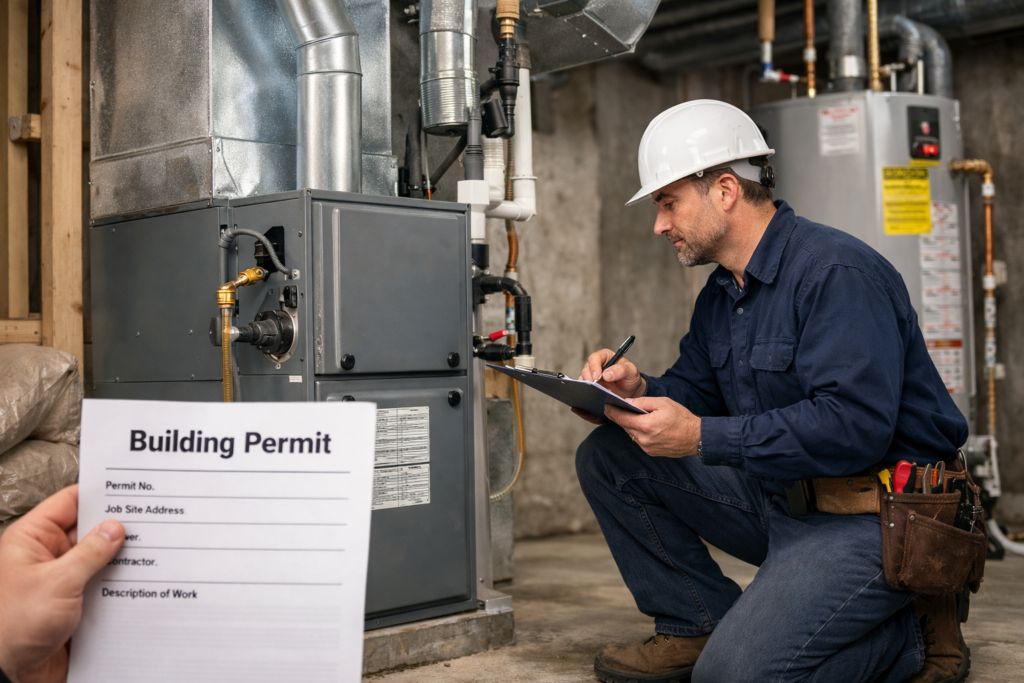
Safety codes are established by the state, but the local towns and cities issue the permits. There are 39 towns in Rhode Island, with each town having its building department. These offices check the applications of permits, charge fees, and hold inspections.
Applications are to be filed to the town in which the property will be found. In the concern of mechanical permit Rhode Island, the local building official or mechanical inspector approves the request.
Procedures vary by town. There are those that need on-site paperwork and others that enable online submissions. Prior verification of local requirements can prevent delays.
Local Furnace Permit Rules in Providence, Warwick, and Cranston
The type of local building permit for furnace installation varies per city
- Providence: Providence is the biggest city and checks the applications very well. More specific plans may be needed, particularly for multi-family buildings.
- Warwick: The city is highly concerned with the licensing of contractors. To avoid unsafe work, one will need proof of insurance and a valid license.
- Cranston: Inspectors in Cranston inspect furnace venting systems to ensure the safe removal of exhaust gas.
A mechanical permit is a legal document in any city that shows that the heating system is safe.
Licensed HVAC Contractors and Permit Responsibilities in Rhode Island
The Rhode Island law mandates that furnaces be installed by licensed professionals only. Professionals with valid HVAC licensing Rhode Island should be aware of the state codes.
They complete the paperwork, give license information and validate insurance. This procedure keeps homeowners safe, since the contractor will be responsible in terms of ensuring code compliance.
Homeowners are advised to be careful when the installer requests a permit. That usually shows that the installer is not licensed or insured. Selecting a reputable company ensures that the permits, inspections and safety are well addressed.
Risks of Installing a Furnace without a Permit in Rhode Island
Avoiding the permit process may be disastrous:
- Fines: The towns may impose fines, suspend operations, and impose additional fees until the issue is resolved.
- Insurance Problems: Insurers are likely to reject the claims in case of destruction of property due to work that is not permitted.
- Safety Hazards: Inspection is the only way to notice the mistakes, and gas leakage or exhaust accumulation may become deadly or harmful.
- Home Sale Delays: Delays in permits are a major red flag in an inspection of the house, leading to its renegotiation or cancellation.
The process of permitting is a last safety check of the homeowners.
Cost and Timeline for Furnace Permits in Rhode Island Cities
Installation of the full cost is usually less than permit costs.
- Expense: The cost can be between 50 and 200 dollars based on the worth of the project.
- Time: Approval can be granted within one day in small towns or within 10 days in big cities.
No work is supposed to commence until the permit is accepted and published at the property.
How to Apply for a Furnace Installation Permit in Rhode Island
The permit preparation consists of well-defined safety measures:
1. Project Review – A licensed contractor inspects the house and compares various furnaces.
2. Paperwork – The applications should contain unit details, license, and insurance evidence.
3. Submission –All submissions are submitted to a local building department.
4. Approval – Once reviewed, there is the payment of fees and the issuance of the permit.
5. Inspection – Final inspection is done after the installation to check code compliance.
To homeowners who are considering repairing or replacing their furnace in Lincoln, Smithfield, and surrounding, this process would give them a safe and sanctioned installation.
Final Thoughts!
Home safety requires the existence of a well-installed heating system. A permit to install a furnace in Rhode Island is not simple paperwork but a very important step to ensure safety.
A permit means you are legal, your home will be worth more, and families will be secured. It is advisable to use professional help when upgrading. Acorn Oil provides professional services, from choosing the right component to handling permits, ensuring a smooth and worry-free installation.
Frequently Asked Questions
1. Do homeowners need a permit to replace an existing furnace in Rhode Island?
Yes, Rhode Island homeowners will be required to obtain a permit to replace an existing furnace, which will verify that gas and electrical connections are safe.
2. Can a homeowner apply for a furnace permit without an HVAC contractor in RI?
The permit may be applied by homeowners, but the majority of towns encourage licensed HVAC contractors since gas and electric systems should be handled by trained specialists.
3. Are furnace permit requirements different by city in Rhode Island?
The state safety regulations remain the same throughout the state, but the permit fee, forms needed, inspection procedure, and duration of the approval process vary by each city.
4. How long does it take to get a furnace installation permit in Rhode Island?
The approval of permits can be different depending on the area of the facility: in small towns, it is frequently permitted, and big cities can take one week or two.
5. Does installing a gas furnace require additional permits in Rhode Island?
Yes, a separate gas permit is also normally required when installing a gas furnace to ensure the connections of the fuel lines are safe and secure.