
Finding an appropriate balance between comfort and heating costs during the long and cold winter months can be beneficial when searching for the best furnace settings for Rhode Island.
With the decline in temperature, the problem of keeping warm is the challenge of homeowners from Providence to the coast. An ineffective setting of the thermostat may cause a house to be too chilly, raise fuel expenses, and impose an additional burden on the heating mechanism.
Know the local heating problems. Proper settings of the furnace enhance comfort and efficiency in either the coastal or interior areas.
This blog post describes the recommended day and night temperatures, the impact of weather on the performance of the furnace, and the easy methods of reducing the cost of heating.
Ideal Furnace Temperature Settings for Rhode Island Winters
Most of the homeowners turn the thermostat excessively high during winter, increasing fuel consumption. The Department of Energy and ENERGY STAR recommend the ideal thermostat setting (68°F) when occupants are present in the house and awake.
During the wet winter season in Rhode Island, indoor conditions are comfortable at 68°F without the furnace being overworked. Any slight adjustment above this point can increase the cost of heating.
As the temperature is cool initially, it is best to turn it down by one degree at a time. This will allow the body to adapt while saving money on heating.
Best Daytime vs. Nighttime Furnace Settings in Cold Climates
| Time Period | Recommended Setting | Why It Works |
| Daytime (Home & Awake) | 68°F | Maintains comfort while controlling fuel usage |
| Daytime (Away) | 60–62°F | Avoids heating an empty home |
| Nighttime (Sleeping) | 58–60°F | Blankets provide warmth; reduces heating costs |
| Extreme Cold Nights | 64–65°F | Protects pipes and reduces furnace strain |
How Rhode Island Weather Affects Furnace Efficiency
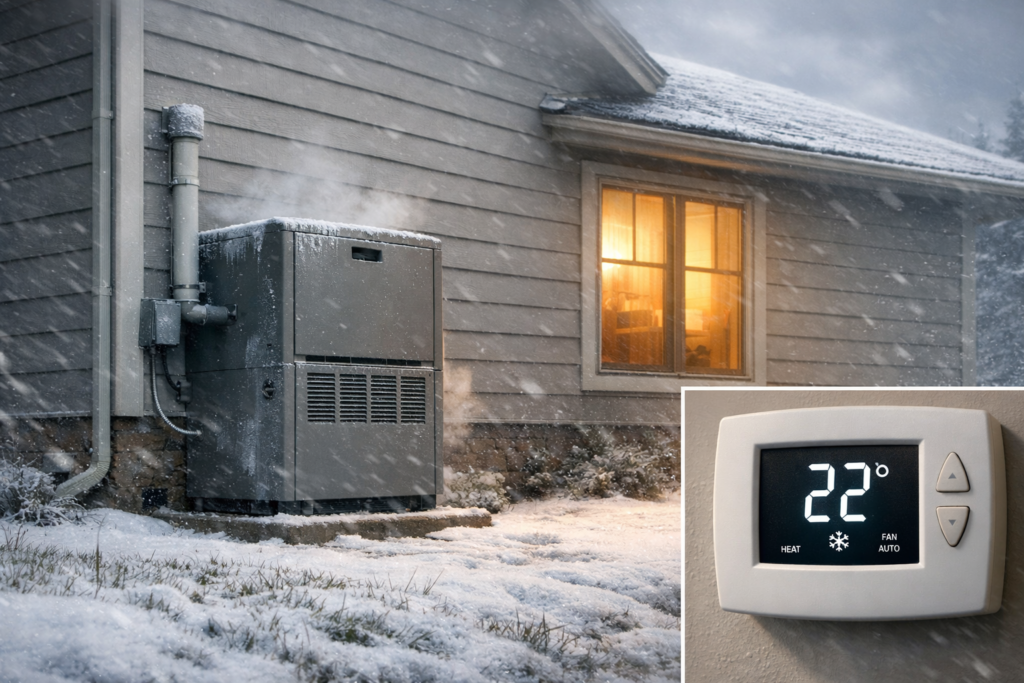
Rhode Island experiences wet and enormously cold winters. The wind pulls heat from homes, and the moist air makes the rooms cooler. This condition makes furnaces operate continuously, particularly in homes where there are gaps or where the insulation is ineffective.
Pressure was maintained in the furnace:
- Keep air vents open and clear
- Seal gaps around windows and door frames
- Provide heat circulation in all rooms
The local weather knowledge will assist in selecting the appropriate winter thermostat settings in Rhode Island.
Energy-Efficient Furnace Settings to Lower Heating Bills
Apart from the temperature, minor variations can contribute to the improved functioning of the furnace:
- Adjust the thermostat to 68°F when you are at home
- Minimize the amount of heat during the night or when nobody is present in home
- Set the thermostat fan to Auto in order to consume less electricity
- Replace or clean the air filters regularly to allow the free airflow
A clogged ventilation system or a fan that operates continuously may consume more fuel and electricity and make rooms colder. Check our Services page for maintenance help.
Recommended Furnace Settings for Coastal Rhode Island Homes
Homes in coastal Rhode Island experience heavy winds and a sticky environment that makes the indoors colder. Do not leave your home in large temperature changes. Maintain the thermostat at around 60°F. It assists the furnace to heat fast and prevents pipes from freezing.
Common Furnace Setting Mistakes to Avoid
- Turning the thermostat to its highest level so that it can heat faster
- Switching off the furnace during the winter months
- Leaving the fan in the ON mode rather than auto mode all the time
- Changing the thermostat to correct mechanical issues
- Trying to disregard unusual sounds like banging or rattling, you may need (furnace repair and replacement in Woonsocket.)
Never allow winter temperatures to drop below 55°F, even on vacation.
Smart Thermostat Settings for Winter Comfort in Rhode Island
Winter thermostat settings Rhode Island are one of the best upgrades that can be considered the best furnace settings for coastal homes.
These devices will also regulate your heating program, turning the heat down when you are not home and heating your house just before you come home. This will help in eliminating the heating of an empty home.
In addition to the simplest scheduling, most models have Wi-Fi connectivity, which means that you can manage your system remotely through your smartphone. Optimizing your settings with regard to local weather conditions can save you a lot of fuel, and comfort is not compromised.
When to Adjust Furnace Settings During Extreme Rhode Island Cold Snaps
During extreme temperatures, changes may put pressure on the furnace. Also, it is required to check the outside temperature. When it is in the single digits, then it must turn the thermostat down to 64-65°F at night.
This prevents excessive coldness in the house and ensures pipes are safe. Constant temperature allows the furnace to operate easily and reduces the work involved in heating the morning during extremely cold weeks in winter.
Conclusion
Using the best furnace settings for Rhode Island is a wise practice for keeping the house warm while trying to control the cost of heating.
By setting a right daytime and nighttime temperature and adapting to extreme cold as well as avoiding most of the mistakes, homeowners can protect not only their furnace but also their savings as well.
To be sure of the comfort of your home during the winter, trust Acorn Oil to supply you with the heating oil and professional services.
Frequently Asked Questions
1. What is the best furnace temperature setting for winter in Rhode Island?
It works best at 68°F which is a balance of comfort, warmth, and winter heating cost reduction in general.
2. Should I lower my thermostat at night during winter?
Yes, it helps save 7 to 10 degrees of fuel as well as bills and also, makes sleeping areas comfortable even in cold winters.
3. How does coastal weather affect furnace settings?
Cold temperatures of the homes are caused by coastal wind and humidity. To avoid overcooling and overstraining the furnace in winter, it is better to avoid deep setbacks.
4. What furnace settings help reduce heating bills?
Set the thermostat to 68°F during the day, reduce the temperatures when not home, switch to Auto, and wash the filters regularly to maintain a higher heating efficiency.
5. Are smart thermostats useful during Rhode Island winters?
Yes, smart thermostats turn on and off, save heating, adapt to weather, and make homes more comfortable and economical across Rhode Island.