
How cold weather in Rhode Island affects furnace performance is a critical issue to the property owners as temperatures start to drop.
The Northeast in winter creates long, severe, and unpredictable winters, and the heating systems are in a constant state of operation to keep the indoors comfortable.
As the temperature of the outside decreases, the pressure inside a furnace increases. This may make it inefficient and wear out faster as well as break down unpredictably.
And when it comes to preventing the expensive breakdowns of your heating system and when you need the heat the most, the most important thing to do is to understand how your heating system works when it is chilly outside.
How Rhode Island’s Winter Climate Impacts Furnace Efficiency
Rhode Island has a humid continental climate characterized by freezes, northeasterners, and regular winter storms. Such conditions frustrate the Rhode Island winter heating.
When the outside temperatures are low, the furnace has to exert more effort to have a comfortable inside temperature, which requires more run time and fuel consumption.
The efficiency of furnaces tends to be low during the cold seasons as the system takes longer cycles to resolve the issue of high heat loss. Motors, burners, and heat exchangers degrade due to constant operations, and this is particularly true of older units.
Even modern high-efficiency furnaces have heating system winter stress when the temperature drops to single digits, and therefore it becomes harder to maintain consistent performance unless properly maintained.
Common Furnace Problems During Extreme Cold in Rhode Island
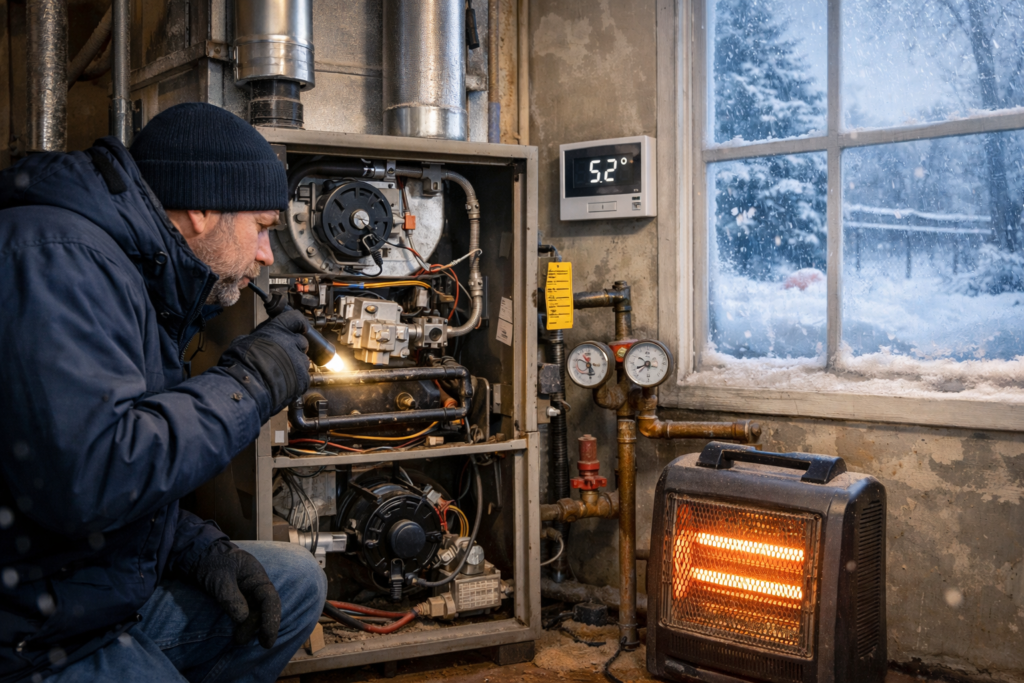
Frozen Condensate Lines
Condensation is a normal process in high-efficiency furnaces. In cases where the drain line passes in an unheated space like an attic or crawl space, it may freeze and block the drain line.
Once this occurs, the system is switched off by safety switches to prevent damage from water.
Overheating Components
The system can overheat whenever it is in continuous operation during the winter and when the airflow is restricted. Obstructed vents or contaminated filters might cause the system to retain heat.
Along with that, the high-limit switch must activate to switch off the burners and allow the blower to cool the unit.
Combustion and Ignition Problems.
Cold temperatures may cause thickening of heating oil or pressurizing gas, and ignition becomes less reliable.
Flame sensors also become residualized more easily when used heavily, resulting in false shutdowns. These problems with furnace systems are typical symptoms of winter stress.
Why Furnaces Work Harder in Coastal Rhode Island Winters
It is an even more difficult task to run a furnace in a cold climate when you are living near the coast.
Wet cold is created by the humid, salty climate of Rhode Island and crawls through structures more violently as compared to dry cold. This can impact cold climate furnace operation.
Heat Loss and Humidity
To sustain the same level of comfort, more frequent cycling of the furnace is required since wet air will cause heat to be carried out of a house faster.
Effects of Wind Chill
Strong coast winds eliminate heat in exterior walls and roofs. According to winter data on home heating performance, coastal homes often have greater heating expenses since furnaces must not only counter the low temperatures but also the heat loss caused by the wind.
Effect of Freezing Temperatures on Gas and Electric Furnaces
Various heating technologies react differently to low temperature, and the knowledge of these variations assists in preparation and troubleshooting.
Oil Furnaces
In extreme cold conditions, such as when there are tanks placed outside or in unheated garages, heating oil may thicken or gel. This can limit fuel flow as well as block nozzles and lines, resulting in shutdowns.
Gas Furnaces
Existence Gas furnaces do not do well in hot weather, and venting is a frequent problem. The snow or ice may block the intake or exhaust pipes. And these issues like carbon monoxide buildup, might result in a safety shutdown.
Electric Heat Pumps
Heat pumps become inefficient when temperatures go below the freezing point. These systems become totally dependent on electric resistance backup heat when outdoor air temperatures reach a level of 30°F, leading to significant surges in energy bills.
Signs Your Furnace Is Struggling During Rhode Island Cold Waves
Warning signs usually appear before the entire system breaks down.
Check common indicators:
- Abnormal sounds like screeching, banging, and rattling
- Short cycling like, the furnace is switched on and off frequently
- Imbalanced heating of rooms
- Unexplained surges in power charges
- Gas furnaces with a yellow pilot light rather than with a stable blue flame
Understanding such indicators supports homeowners in arranging repairs ahead of failure in the case of a winter storm.
How Rhode Island Home Insulation Influences Furnace Performance
Residential heating systems in Rhode Island involve only the furnace. Enclosure of the building significantly affects the efficiency of holding the heat.
Drafts and Heat Losses
Poor insulation attracts cold air inside and lets the warm air in through windows, attics, and walls. This adds to the consumption and usage of fuel as it forces the furnace to continuously operate.
Improving Insulation
Drafts can be sealed, attic insulation can be upgraded, and weather stripping can be installed to save a lot of heat. When the home is well heated, the furnace efficiency in cold weather will perform better, so the system does not have to run around the clock.
Preventive Furnace Maintenance Tips for Rhode Island Homeowners
The best method of winter breakdown prevention is preventive care. Furnace maintenance in winter should include:
- Checking the filters monthly and replacing them during intensive use
- Removing snow and ice in outside vents and intakes
- Checking the accuracy of the thermostat and changing batteries
- Checking humidifiers to ensure that they are clean
- Radiators in boilers were bled to release any trapped air
Professional Services Scheduling can ensure that the heat exchangers, safety controls, and blower components are maintained diligently to prevent small problems that develop into large failures.
When to Call a Rhode Island HVAC Professional During Winter
In certain cases, professional help is needed:
- No odor of heat or fuel suggests a possible hazard
- Loud banging sounds can indicate delayed ignition
- The frequent use of the reset button may overload the combustion chamber
To find quick, efficient services for the residential heating system in Rhode Island, customers can address Acorn Oil, which is a reputable heating utility provider. Quick service saves time, and in case of extreme weather, it avoids damages.
Final Thoughts
The information described above about how cold weather in Rhode Island affects furnace performance assists the property owners in covering their heating systems against the stress of seasonal changes.
Neglecting the initial indicators or omitting maintenance leads to the threat of failures in the coldest months.
Stay ahead of winter problems with professional care. Contact Acorn Oil to maintain your house or to fix any immediate repairs or seek professional advice to ensure that your home is efficient, safe, and warm all season round.
Frequently Asked Questions
1. Why does my furnace run longer during Rhode Island winters?
When temperatures are extremely low, heat loss rises and furnaces extend cycles to heat up the indoors.
2. Can extremely cold weather damage a furnace?
Yes. The winter weather is marked by frozen condensate lines, overstruck motors and damaged heat exchangers.
3. How cold is too cold for a furnace to operate efficiently?
Because of low temperature, the gas and oil furnaces may operate even below zero temperature but the heat pumps cannot under 30 F.
4. Does coastal weather affect furnace lifespan?
Salt and moisture can increase the rate of corrosion, thus reducing equipment life without maintenance.
5. How often should furnaces be serviced?
At least once a year, they should be serviced professionally, preferably before the winter sets in.