
The furnace is the most valuable appliance in a home when the Atlantic brings in winter storms and the temperatures drop to below the freezing point.
It is not about warmth and coziness only, but about safety and efficiency and the ability to save money on emergency maintenance in autumn when it is most necessary. The winter in Rhode Island is not typical.
From the cities of Providence to the coastal areas, people have to deal with cold winds from the ocean, humidity, and abrupt changes in the temperature.
Prepare your furnace for Rhode Island winters is a step-by-step guide that has covered all the information for homeowners and they should know when preparing a furnace before the first snow.
Why Furnace Preparation Is Critical for Rhode Island Winters
The Ocean State has one of the most erratic winter weathers in New England. There is an average of 30 degrees of winter temperatures, and the wind chill along the coastlines can cause it to feel even colder. In case of a nor’easter, furnaces may run over days.
Heating systems might go wrong at a time when they are required the most without being prepared. A sudden malfunction of the furnace during a cold winter night may result in frozen water and broken windows, damage to property, and poor living conditions.
Most of the issues are prevented and efficiency is enhanced by furnace maintenance Rhode Island, which saves money to homeowners.
Common Furnace Problems Faced by Homeowners in Rhode Island
- Humidity and Corrosion: It can be the reason for oxidation of the metal structures and corrosion of the electrical connections. And especially in the houses located close to the ocean or Narragansett Bay.
- Ignition Failures: When furnaces are not used during the spring and summer, ignition systems develop some problems. Furnaces commonly do not start during the fall because of dust build-up, faulty sensors, and faulty pilot lights.
- Airflow Restrictions: Clogged vents as well as filthy filters stop the flow of air, and hamper the proper functioning. Such activity consumes more fuel, burns more energy.
- Thermostat Failures: Outdated or incorrectly installed thermostats are not so capable to check the room temperature. Sometimes they turn on the heat too frequently or too infrequently, which makes the house not warm enough.
Step-by-Step Furnace Inspection Checklist Before Winter
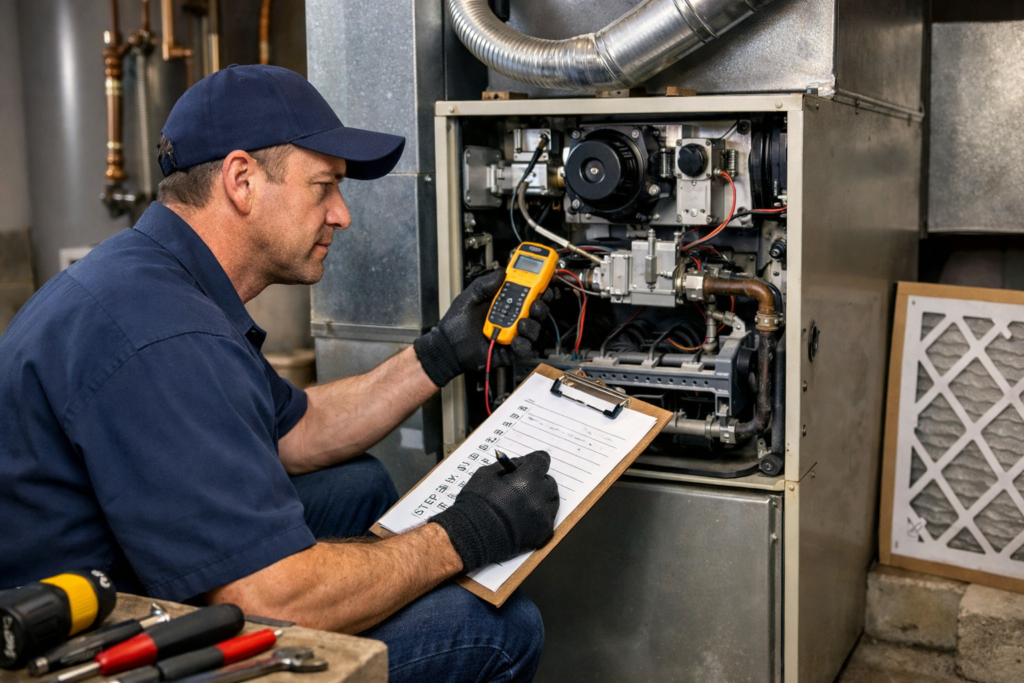
Check the following cold weather furnace care steps:
- The air filter should be checked every month in winter. Replace it every 1–3 months. Clean filter enhances a good quality of air and facilitates the furnace to operate efficiently.
- Switch on the heating system as well as notice the furnace is turning on as usual. Also, ensure that the temperature set is the same as that of the room temperature.
- Performing this step is necessary to verify vents and registers. Go around your house and turn on all vents and keep them free of furniture, curtains or rugs to allow air free movements.
- When you switch on the furnace, observe and hear for banging, rattling, or squealing sound. When you hear such sounds, then have a professional check it up.
- In the case of a gas furnace, check near the device. When the furnace happens to smell of gas, it should be turned off at once and a professional called.
How Rhode Island’s Coastal Climate Affects Furnace Performance
The ocean serves as a beautiful scenery, but heating systems could fail. Salt in the air accelerates the corrosion issues in metals, high humidity degrades the electrical parts and promotes rusting.
The abrupt changes of temperature contribute to the issue. The temperature in Rhode Island could go up to 50 o C and the following day, it may be snowing.
The process of heating a furnace requires very frequent switching on and off, which results in wear but not a constant temperature. Such coast conditions imply that normal maintenance is even more significant to the Rhode Island homeowners.
Professional Furnace Tune-Up Services in Rhode Island: What to Expect
While minor repairs may be performed by homeowners, most winter emergencies can be prevented by professional furnace tune-up services.
Technicians inspect all components, clean burners and heat exchanger, test safety controls and test the efficiency of the furnace in burning the fuel. They grease moving machines and inspect against gas waste or carbon monoxide.
The majority of the HVAC maintenance operations would need the use of special tools and training. Qualified technicians identify minor issues before they turn out to be expensive services and maintain the furnace.
Energy-Efficient Furnace Tips for Rhode Island Homes
Heating is not that expensive to do. These strategies of energy efficient heating systems do not only enable the Rhode Island homeowners to save money themselves, but they also get to stay comfortable.
- Installing a programmable thermostat should turn down the temperatures automatically when the people are asleep or not at home.
- When the weather is stripping and caulking around windows, doors, and any other opening.
- Clean furnace filters are the reason for blocking airflow and making the filter ineffective (by up to 15 percent).
- Note: make the upgrade to the new Energy Star-certified furnace when the present system is aged (more than 15 years old).
When to Repair vs. Replace Your Furnace in Rhode Island
| Factor | Repair | Replace |
| Age of Furnace | Less than 15 years old | 15-20 years or older |
| Repair Cost | Less than 50% of replacement cost | More than 50% of replacement cost |
| Efficiency Rating | AFUE 80% or higher | AFUE below 80% |
| Frequency of Repairs | First or second issue | Multiple repairs each winter |
| Energy Bills | Stable or decreasing | Steadily increasing |
| Heating Performance | Heats home evenly | Uneven temperatures or cold spots |
| Safety Alarms | Slight issues, no carbon monoxide | Cracked heat exchanger or CO risks |
Preparing Your Furnace for Snowstorms and Freezing Temperatures in Rhode Island
Winter in Rhode Island is not that predictable and very harsh so these winter home heating tips will help your system to cope with any storm.
The first thing is, to test the furnace before a big storm, make sure that it is working well, and also that there is enough fuel.
Clear snow and ice off outside vents and exhaust pipes since blocked vents may accumulate harmful amounts of carbon monoxide in the house. Do not keep changing the thermostats whenever the weather is extremely cold.
Seal the vents in non-useful rooms as this forms pressure-related imbalances that lower efficiency and may ruin ductwork.
Conclusion: Keep Your Home Warm All Winter
The above information about “Prepare your furnace for Rhode Island winters” would be informative to everyone, and hope to avoid sudden furnace failure experiences in extreme winter weather.
Acorn Oil will provide professional furnace repair and replacement in West Warwick and the entire state of Rhode Island. Check our Services page and understand how to keep homes in Rhode Island warm and safe during winter.
Frequently Asked Questions
1. How often should a furnace be serviced in Rhode Island?
This requires the best professional furnace service (at least once a year) for proper efficiency and to combat coastal climate creates specific challenges.
2. When is the best time to prepare your furnace for winter in Rhode Island?
Begin securing your home to stay warm in winter in September or early October. At this time, there is no rush as well as HVAC professionals are not so busy.
3. What type of furnace works best for Rhode Island’s climate?
House gas furnaces are effective in Rhode Island. Heat pumps require a supplementary heat supply in the event of extreme coldness.
4. Can coastal humidity in Rhode Island damage a furnace?
Climate conditions such as salt air and humidity may also caused by broken electrical connections. To avoid such problems in coastal homes, it is important that you do inspections on an annual basis.
5. How much does a furnace tune-up cost in Rhode Island?
A professional tune-up of a furnace can either cost between $80 and $150. It avoids expensive emergency maintenance and maintains your heating efficiency during winter.